Category: Mental Health Awareness

  • What Is Paranoid Personality Disorder?

    What Is Paranoid Personality Disorder?

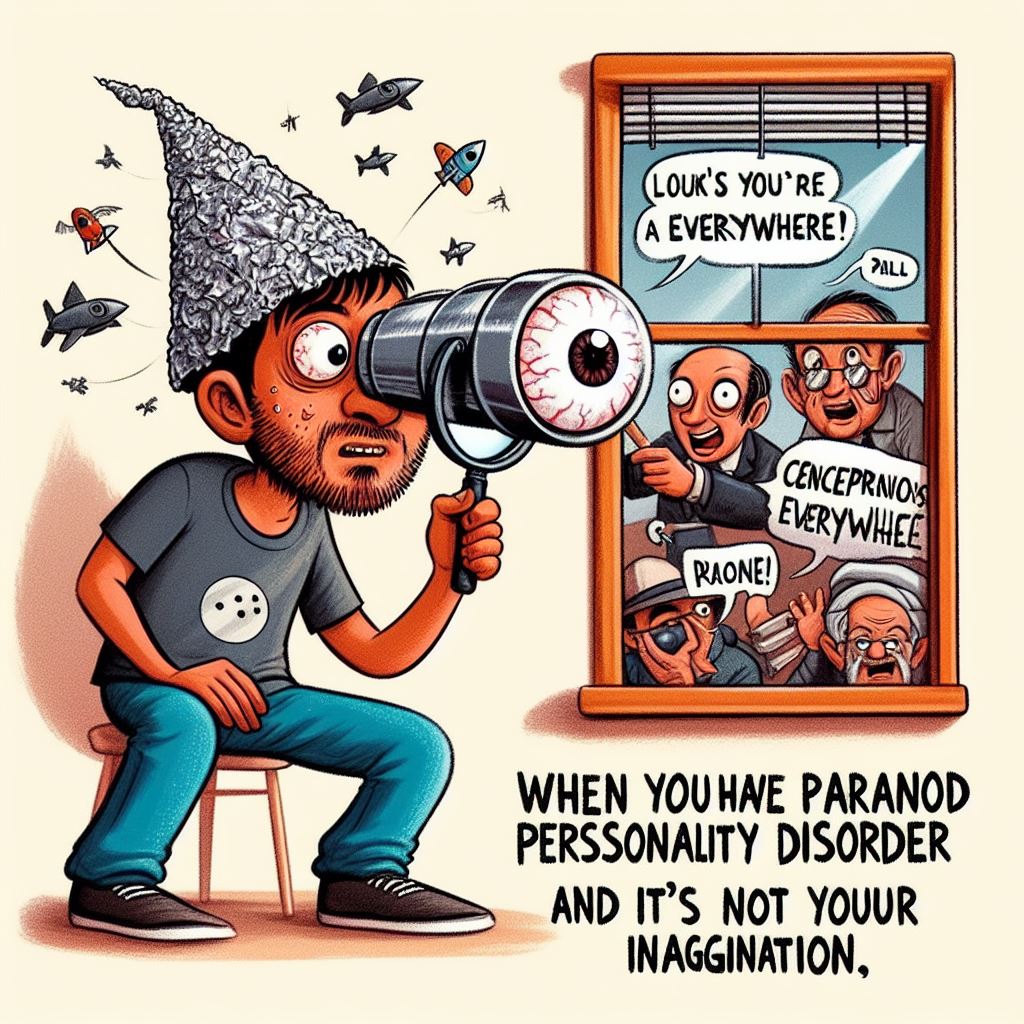
    Paranoid personality disorder (PPD) is a mental health condition that affects how a person thinks and behaves towards others. People with PPD have a persistent and pervasive pattern of distrust and suspicion, often interpreting others’ motives as malicious or harmful. They may also experience psychotic symptoms, such as delusions and hallucinations, that reinforce their distorted beliefs.

    PPD can cause significant impairment in social, occupational, and personal functioning, as well as increased risk of depression, anxiety, substance abuse, and suicidal behavior. PPD is estimated to affect about 2.3% of the general population and is more common in men than in women.

    The exact causes of PPD are not well understood, but some possible factors include genetic predisposition, early childhood trauma, cultural influences, and brain abnormalities. PPD is often associated with other mental health conditions, such as schizophrenia, borderline personality disorder, delusional disorder, and avoidant personality disorder.

    The main symptom of PPD is a chronic and unjustified mistrust of others, even when there is no evidence or reason to support it. People with PPD may exhibit some or all of the following behaviors:

    • They are constantly on guard for signs of betrayal, deception, or exploitation by others.
    • They are reluctant to confide in or share personal information with anyone, fearing it will be used against them.
    • They are hypersensitive to criticism, insults, or perceived slights, and may react angrily or with hostility.
    • They hold grudges and do not forgive easily.
    • They are suspicious of the loyalty or trustworthiness of their friends, family members, partners, or colleagues.
    • They may accuse others of having hidden agendas or ulterior motives, or of plotting against them or conspiring to harm them.
    • They may believe that they are the target of persecution, harassment, or discrimination by others or by institutions (such as the government, the media, or the legal system).
    • They may have delusions of grandeur or persecution, such as believing that they have special abilities or powers, or that they are being followed, watched, or monitored by enemies.
    • They may experience hallucinations of voices or images that confirm their paranoid beliefs or threaten them.

    Some examples of how PPD can affect a person’s life are:

    • A person with PPD may refuse to seek medical help for a serious condition, fearing that the doctors or nurses are trying to poison them or implant devices in their body.
    • A person with PPD may isolate themselves from their family and friends, believing that they are all in league against them or have been replaced by impostors.
    • A person with PPD may quit their job or drop out of school, thinking that their boss or teachers are sabotaging their performance or setting them up for failure.
    • A person with PPD may become violent or aggressive towards others whom they perceive as threatening or hostile, even if they are innocent bystanders or authority figures.

    The diagnosis of PPD is based on clinical criteria and a thorough psychological evaluation. There is no specific test for PPD, but some tools that may be used to assess the severity and impact of the symptoms include:

    • The Structured Clinical Interview for DSM-5 (SCID-5)
    • The Minnesota Multiphasic Personality Inventory (MMPI)
    • The Paranoid Personality Disorder Scale (PPDS)
    • The Paranoid Thoughts Scale (PTS)

    The treatment of PPD can be challenging due to the nature of the disorder and the resistance of the patients to seek help or trust the therapists. However, some options that may be helpful include:

    • Cognitive-behavioral therapy (CBT), aims to identify and challenge the distorted thoughts and beliefs that fuel the paranoia and teach coping skills to manage emotions and behaviors.
    • Antipsychotic medication can reduce the intensity and frequency of psychotic symptoms such as delusions and hallucinations.
    • Psychoeducation involves providing information and support to the patients and their families about the disorder and its treatment.
    • Social skills training helps to improve the communication and interpersonal skills of the patients and enhance their social functioning.

    PPD is a serious and chronic condition that can cause significant distress and impairment in various aspects of life. However, with proper diagnosis and treatment, some people with PPD can achieve a better quality of life and reduce their suffering.

    One question that may arise when learning about PPD is how it differs from obsessive-compulsive disorder (OCD). OCD is another mental health condition that involves recurrent and intrusive thoughts (obsessions) and repetitive behaviors (compulsions) that aim to reduce anxiety caused by the obsessions. OCD can also cause impairment in social, occupational, and personal functioning. The main difference between PPD and OCD is that people with PPD have paranoid beliefs that are not based on reality, while people with OCD have insight into the irrationality of their obsessions and compulsions. People with PPD are convinced that others are out to harm, deceive, or exploit them, and they often interpret benign events as malicious or threatening. People with OCD, on the other hand, recognize that their fears and rituals are excessive and unreasonable, but they feel unable to control them. Another difference is that people with PPD tend to isolate themselves from others and avoid seeking help, while people with OCD may seek professional treatment or support from family and friends.

    The early signs and symptoms of PPD may include:

    • Excessive doubt or suspicion of others’ motives or intentions
    • Fear of being exploited, harmed, or betrayed by others
    • Reluctance to share personal information or confide in anyone
    • Hypersensitivity to criticism or perceived insults
    • Holding grudges and being unforgiving of perceived slights
    • Difficulty relaxing or letting go of worries
    • Perceiving hidden meanings or threats in ordinary comments or situations
    • Having rigid or extreme beliefs that are not supported by evidence
    • Being overly self-reliant and independent
    • Having trouble working or cooperating with others

    Recognizing and seeking help for PPD can be challenging, as people with this condition may not acknowledge that they have a problem or may distrust mental health professionals. However, early recognition and intervention can lead to better outcomes, as PPD can cause significant distress and impairment in various aspects of life, such as relationships, work, and social functioning.

    One of the main goals of treatment for PPD is to help the person develop more realistic and positive views of themselves and others and to reduce their fear and paranoia. Treatment may involve psychotherapy, medication, or a combination of both. Psychotherapy can help the person identify and challenge their distorted thoughts and beliefs, learn coping skills and strategies to manage their emotions and behaviors and improve their self-esteem and communication skills. Medication can help reduce the anxiety, agitation, or depression that may accompany PPD.

    The role of family and social support in the treatment of PPD is crucial, as their involvement can help improve the patient’s engagement in therapy, provide emotional and practical assistance, and foster a more trusting and secure environment. Family and friends can also benefit from education and counseling on how to understand and cope with PPD, how to communicate effectively and respectfully with the person, how to avoid reinforcing their paranoia or provoking their hostility, and how to set healthy boundaries and expectations.

    PPD can have a significant impact on relationships, as people with this condition may have difficulties in forming and maintaining intimate connections. They may isolate themselves from others, avoid intimacy or closeness, accuse their partners of infidelity or disloyalty, or become controlling or abusive. They may also struggle to make friends, socialize, or participate in group activities. As a result, they may experience loneliness, rejection, or alienation.

    To illustrate the effects of PPD on individuals’ lives, here are some examples of real-life scenarios or case studies:

    • John is a 45-year-old accountant who has been married for 20 years. He has always been suspicious of his wife’s fidelity, even though she has never given him any reason to doubt her. He constantly checks her phone, email, and social media accounts for signs of cheating. He also accuses her of flirting with her co-workers, friends, or strangers. He often gets angry and verbally abusive when she tries to explain herself or defend herself. He refuses to go to counseling with her or seek help for himself.
    • Lisa is a 32-year-old teacher who has been working at the same school for 10 years. She believes that her colleagues are jealous of her success and are plotting to sabotage her career. She does not trust anyone at work and keeps to herself. She does not share any information about her personal life or interests with anyone. She also thinks that her students are disrespectful and ungrateful. She often snaps at them or gives them harsh punishments for minor mistakes. She has received several complaints from parents and administrators about her behavior.
    • Sam is a 28-year-old engineer who has recently moved to a new city for a job opportunity. He has no friends or family in the area and feels lonely and isolated. He tries to join some online groups or forums related to his hobbies or interests, but he soon becomes paranoid that the other members are mocking him, lying to him, or trying to scam him. He deletes his accounts and stops interacting with anyone online. He also avoids going out in public or meeting new people. He spends most of his time at home alone.


  • Why does time feel like it moves faster as you get older? How does this relate to trauma caused by the pandemic and what other sort of trauma did the pandemic cause with the younger generations

    Why does time feel like it moves faster as you get older? How does this relate to trauma caused by the pandemic and what other sort of trauma did the pandemic cause with the younger generations

    Many people have experienced a sense of time distortion during the pandemic, feeling like days, weeks, and months have blurred together or passed by too quickly. This phenomenon is not new, however. It is well-known that as we age, our perception of time changes and we tend to feel like time is speeding up. But why does this happen and what are the implications for our mental health?

    One possible explanation for why time seems to move faster as we get older is that we have fewer novel experiences and more routine activities. When we encounter something new or exciting, our brain pays more attention and encodes more details in our memory. This makes the event seem longer and more memorable in retrospect. On the other hand, when we do the same things over and over again, our brain filters out the redundant information and stores less in our memory. This makes the event seem shorter and less memorable in retrospect.

    Another possible explanation for why time seems to move faster as we get older is that we use different reference points to measure time. When we are young, we have fewer life experiences and a shorter perspective of time. A year seems like a long time because it is a large fraction of our life span. As we grow older, we have more life experiences and a longer perspective of time. A year seems like a short time because it is a small fraction of our life span.

    The pandemic has disrupted both of these factors that influence our perception of time. On one hand, the pandemic has reduced our opportunities for novel experiences and increased our exposure to routine activities. We may feel like we are stuck in a loop of doing the same things every day, with little variation or excitement. This can make time seem to fly by without leaving much trace in our memory. On the other hand, the pandemic has also introduced a lot of uncertainty and stress into our lives, which can make time seem to drag on or stand still. We may feel like we are waiting for something to change or improve, without knowing when or how it will happen. This can make time seem to stretch out or stop in our minds.

    The pandemic has also affected different generations in different ways, creating different types of trauma and challenges. For older generations, the pandemic may have triggered feelings of loss, grief, isolation, and mortality. Due to the virus or the lockdown measures, they may have lost loved ones, friends, jobs, or social connections. They may have faced increased health risks or difficulties accessing medical care. They may have felt more vulnerable or helpless in the face of an invisible threat. For younger generations, the pandemic may have disrupted their education, career, socialization, and development. They may have missed out on important milestones, opportunities, experiences, or relationships due to the virus or the lockdown measures. They may have faced increased anxiety, depression, loneliness, or boredom due to the lack of stimulation, interaction, or support. They may have felt more frustrated or hopeless about their prospects.

    The pandemic has been a traumatic event for many people across different age groups, but it has also been an opportunity for resilience and growth. It is important to acknowledge how the pandemic has affected our perception of time and our mental health and to seek help if needed. It is also important to find ways to cope with the challenges and changes that the pandemic has brought and to create meaning and purpose in our lives. Some possible strategies include:

    • Seeking novelty and variety in our daily routines, such as trying new hobbies, skills, activities, or foods.
    • Setting goals and plans for the future, such as learning something new, pursuing a passion project, or preparing for a career change.
    • Maintaining social connections and support networks, such as reaching out to friends, family, or community members online or offline.
    • Practicing gratitude and optimism, such as appreciating what we have, celebrating our achievements, and looking forward to positive outcomes.
    • We are taking care of ourselves physically and emotionally, such as getting enough sleep, exercise, nutrition, and relaxation.

    Time is a precious resource that we cannot control or reverse, but we can influence how we perceive and use it. By being mindful of how the pandemic has affected our sense of time and by adopting healthy coping strategies, we can make the most of our time and live more fully and meaningfully.

    How can I cope with pandemic trauma?

    The pandemic has been a traumatic event for many people, affecting their sense of time, mental health, and well-being. If you are feeling overwhelmed, distressed, or hopeless due to the pandemic, you are not alone. There are ways to cope with the pandemic trauma and to heal from its effects. Here are some suggestions:

    • Seek professional help if needed. If you are experiencing symptoms of post-traumatic stress disorder (PTSD), such as flashbacks, nightmares, avoidance, hypervigilance, or negative mood, you may benefit from therapy or medication. Some online resources and hotlines can provide support and guidance.
    • Talk to someone you trust. Sharing your feelings and experiences with a friend, family member or counselor can help you process your emotions and reduce your stress. You can also join a support group or a community of people who have gone through similar situations.
    • Practice self-care. Taking care of your physical and emotional needs can help you cope with the pandemic trauma and improve your mood. Make sure you get enough sleep, exercise, nutrition and relaxation. Avoid alcohol, drugs, or other substances that can worsen your symptoms or impair your judgment.
    • Engage in positive activities. Doing things that bring you joy, satisfaction or meaning can help you cope with the pandemic trauma and enhance your well-being. You can try new hobbies, skills, activities, or foods. You can set goals and plans for the future. You can express yourself creatively or spiritually.
    • Cultivate gratitude and optimism. Focusing on the positive aspects of your life and situation can help you cope with the pandemic trauma and increase your resilience. You can appreciate what you have, celebrate your achievements, and look forward to positive outcomes. You can also practice gratitude exercises, such as writing down three things you are grateful for daily.
    • Seek novelty and variety. Breaking the monotony and routine of your daily life can help you cope with the pandemic trauma and stimulate your brain. You can explore new places, cultures, or perspectives. You can challenge yourself to learn something new or to do something differently.
    • Maintain social connections. Staying in touch with your friends, family, and community can help you cope with the pandemic trauma and provide you with support and comfort. You can reach out to them online or offline, depending on the safety measures and restrictions in your area. You can also volunteer or help others who are in need.

    The pandemic has been a traumatic event for many people, but it has also been an opportunity for resilience and growth. By following these suggestions, you can cope with the pandemic trauma and live more fully and meaningfully.

  • Object Permanence and ADHD: What You Need to Know

    Object Permanence and ADHD: What You Need to Know

    • photo that represents object permanence in adhd and children
    • photo that represents object permanence in adhd and children
    • photo that represents object permanence in adhd and children

    Object permanence is the ability to understand that objects still exist even when they are out of sight. This is a cognitive skill that develops in early childhood. Some people believe that attention deficit hyperactivity disorder (ADHD) is related to problems with object permanence. They think that people with ADHD tend to forget about things or people that are not in their immediate environment. However, this is not a medically recognized symptom or diagnosis of ADHD. In this blog post, we will explain what object permanence is, what ADHD is, how they affect each other, and what strategies can help them cope.

    What is object permanence?

    Object permanence was first described by Swiss psychologist Jean Piaget in the 1960s. He observed how babies reacted when a favorite toy was shown to them and then hidden from them. Babies who had not developed object permanence would appear confused or upset as if the toy had disappeared. Babies who had developed object permanence would continue to look for the toy, knowing that it still existed somewhere.

    According to The American Academy of Pediatrics, some babies can demonstrate an understanding of object permanence as early as 4–5 months of age. However, most infants do not grasp the concept until around 9 months old.

    Object permanence is important for cognitive development because it helps children form mental representations of the world and understand the concept of causality. It also helps children develop memory, language, and problem-solving skills.

    What is ADHD?

    ADHD is a neurodevelopmental disorder that affects the brain’s ability to regulate attention, activity, and impulses. It can cause problems with learning, behavior, and social skills. It is one of the most common mental disorders affecting children and often lasts into adulthood.

    ADHD has three main types: predominantly inattentive, predominantly hyperactive-impulsive, and combined.

    • Predominantly inattentive type: People with this type have difficulty focusing, organizing, following instructions, or completing tasks. They may be easily distracted, forgetful, or make careless mistakes.
    • Predominantly hyperactive-impulsive type: People with this type have difficulty sitting still, controlling impulses, or waiting their turn. They may be restless, fidgety, talkative, or interruptive.
    • Combined type: People with this type have symptoms of both inattention and hyperactivity-impulsivity.

    The exact cause of ADHD is unknown, but research suggests that genetics, brain structure and function, and environmental factors may play a role.

    How does object permanence affect people with ADHD?

    Some people have suggested that people with ADHD have problems with object permanence. They claim that people with ADHD have difficulty remembering things that are not in their sensory range, such as sight, sound, or touch. They argue that this leads to an “out of sight, out of mind” phenomenon, where people with ADHD ignore or neglect things or people that are not present.

    For example, a person with ADHD may forget about their homework assignment once they leave the classroom. Or they may lose interest in their friend once they move to another city.

    However, this is not a scientifically proven theory. Object permanence is not a recognized medical condition or symptom in ADHD. A person with ADHD cannot be diagnosed with object permanence problems.

    The underlying cause of forgetfulness in ADHD is more likely related to poor working memory. Working memory is the ability to hold and manipulate information in your mind for a short period. It helps you perform tasks such as planning, problem-solving, decision-making, and learning.

    People with ADHD have poor working memory compared to people without ADHD. This means they have trouble keeping track of multiple pieces of information at once. They may also have difficulty switching between different tasks or contexts.

    Poor working memory can explain why people with ADHD forget about things or people that are not in their immediate attention. It is not because they do not understand that they still exist, but because they have trouble keeping them in their mental space.

    How can people with ADHD cope with forgetfulness?

    Forgetfulness can cause frustration, stress, and embarrassment for people with ADHD and their loved ones. It can also affect their performance and productivity at school or work. However, some strategies can help people with ADHD improve their memory and organization skills.

    Some of these strategies include:

    • Using external reminders such as calendars, alarms, timers, notes, lists, labels, or apps to keep track of important dates, tasks, or items.
    • Creating routines and habits for daily activities such as getting ready in the morning, doing homework, or preparing for bed.
    • Organizing your space and belongings in a way that makes sense to you and reduces clutter.
    • Putting things back where they belong after using them or having designated places for frequently used items.
    • Asking for help from others such as family members, friends, teachers, or coworkers when you need reminders or support.
    • Seeking professional help from a doctor, therapist, coach, or tutor who can provide medication, counseling, training, or guidance for managing your symptoms.

    Conclusion

    Object permanence is the ability to understand that objects still exist even when they are out of sight. It is a cognitive skill that develops in early childhood. ADHD is a neurodevelopmental disorder that affects the brain’s ability to regulate attention, activity, and impulses. It can cause problems with learning, behavior, and social skills. Some people believe that ADHD is related to problems with object permanence. They think that people with ADHD tend to forget about things or people that are not in their immediate environment. However, this is not a medically recognized symptom or diagnosis of ADHD.

    The underlying cause of forgetfulness in ADHD is more likely related to poor working memory. Working memory is the ability to hold and manipulate information in your mind for a short period. It helps you perform tasks such as planning, problem-solving, decision-making, and learning.

    People with ADHD can cope with forgetfulness by using external reminders, creating routines, organizing their space, asking for help, and seeking professional help. These strategies can help them improve their memory and organization skills and reduce the negative impact of their symptoms on their lives.

    References: